
Project Manager — is a specialist responsible for achieving the project goals. A Project Manager should draw up a plan, ensure purchase of the necessary resources and actual project implementation, with a defined scope, start date and end date.
A professional acting as a Project Manager possesses the knowledge and skills required to achieve the goals set by a customer. A Project Manager identifies the necessary steps and selects suitable specialists based on their expertise and personal qualities to work on a specific project.
It sounds like a managerial role, but the difference is that a Project Manager focuses on specific projects within an organization, managing the tasks, resources and the team to achieve the specific project goals set by a customer. Several different projects may run in parallel within a single organization, bringing together the specialists from a wide variety of the departments. It is the Project Manager who coordinates their efforts, focusing on effective achievement of the specific project goals within the set deadlines.
In the first part of this series of articles, we will tell about the profession and strategic skills. In the second and final part, we will cover the tactical and soft skills.
A Project and Product Manager — is this not the same?
The Project Manager and Product Manager play key roles in development and implementation of the products, and these two professions are often confused. But their responsibilities and goals differ.
What does a Junior Project Manager do?
A Project Manager, unsurprisingly, manages the projects. His task is to organize the workflow so that the project is completed on time and within the budget established, whilst meeting all quality requirements. He coordinates the work between different teams and specialists, resolves the issues as they arise and makes the decisions aimed at optimizing the process. An effective Project Manager has a deep understanding of the project goals, can adapt to the changes and skilfully manages the risks to ensure successful completion of the project.
According to Glassdoor, the Project Managers’ salaries in the US range from $93,000 to $164,000 per year. In the Kazakhstan market, the Project Managers’ salaries start from 150,000 tenge (for the specialists with virtually no experience) and can reach up to 1 million tenge per month.
The profession of a Project Manager opens up a wide range of the career opportunities across a variety of the sectors — from IT and construction to marketing and concerts management. This career path is valued for versatility of project management skills, which are applicable in any field requiring planning, resource coordination, communication and achievement of the specific goals within the established timelines.
Moreover, the skills and experience gained through project management can serve as a springboard for transitioning into the top management roles, such as the Director of Operations or even CEO, as these positions require a deep understanding of project management methods, strategic planning and effective team management.
What you need to know to become a Junior Project Manager
Project management involves applying the knowledge, skills, tools and techniques to both managerial and leadership activities. Managerial activities focus on the means of achieving the project goals, such as establishing the effective processes, planning, coordination, measurement and monitoring of work, amongst other things.
Leader activity focuses on people. Leadership involves influencing, motivating and listening which enable to act and other actions related to the project team. Both aspects are important for achieving the intended results. Understanding AI systems is also crucial – they significantly increase productivity for the repetitive tasks on any project.
For this very reason, a significant part of project management training is devoted to developing the soft skills, with an emphasis on leadership skills. Nevertheless, technical knowledge, both general and subject-specific, relating to the chosen industry is extremely important for professional success. Below, we will discuss the necessary technical and soft skills.
For convenience, we will focus on the most common and popular skills. It is important to note that some of the tools mentioned, such as Gantt charts, can be applied at all project stages.
Key Technical Skills
Strategic Aspects
- Planning Skills: Knowledge of the basic principles and methodologies of project management, such as Agile, Scrum and Waterfall. Tools: JIRA, Trello, Asana, DarLean.
- Risk Management: The ability to assess the potential project risks and develop the strategies to minimize them. Tools: SWOT-analysis, Delphi method.
- Understanding of the Business Processes: Helps to interact with various departments within an organization and to take business goals and needs into account when planning and implementing the projects. Tools: BPMN notations for modelling and visualisation.
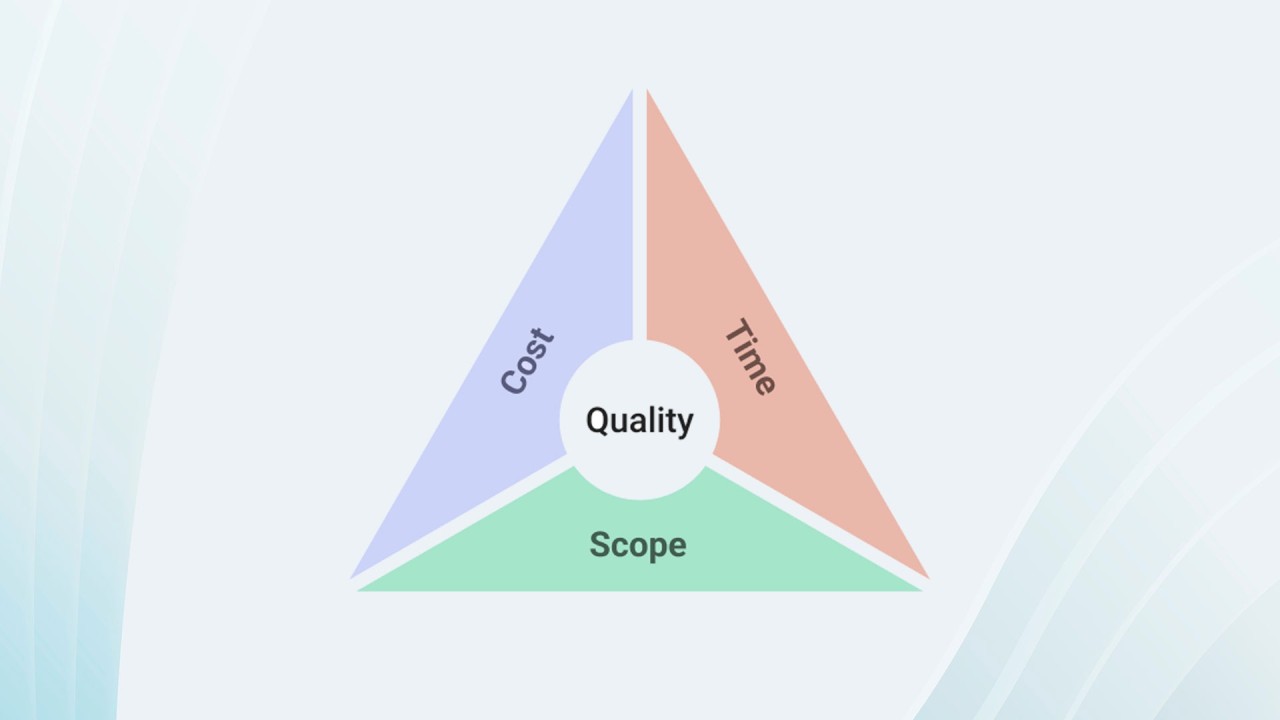
- Quality Management: Understanding of the methods and standards for ensuring quality of the project product or service. Tools: Six Sigma, Pareto charts, Ishikawa charts (cause-and-effect diagrams), check lists, the project triangle and PDCA cycle.
- Understanding of the Project Life Cycle: Knowledge of the main stages a project goes through from start to finish. Includes initiation, planning, execution, monitoring and controlling, as well as project close-out.
- Stakeholder Management: The ability to identify the stakeholders and master the techniques for communicating and managing the relationships with the project stakeholders.
- Change Management: The ability to manage and adapt to the project changes, ensuring minimal impact on the schedule and quality of the work. Tools: change matrix, change management system and change log.
- Working with AI: The ability to use artificial intelligence to boost productivity. It enables automation of the routine tasks: resource allocation, tracking task progress and managing the project timelines, handling recurring stakeholder requests, generating the reports and updating the task statuses. AI can also analyse large volumes of the data to support informed decision-making. This improves project management efficiency, minimizes the risks and facilitates more accurate resource planning.
You can master the profession of “Project Manager” at DAR University. The course lasts 2 months, during which time you will gain the skills of project implementation, developing the technical tasks, generating the reports and working with the customers. The mentor is Askar Aituov, Google Developers Coordinator for Central Asia and certified IT manager. He has 15 years of experience in creating and managing the IT products.